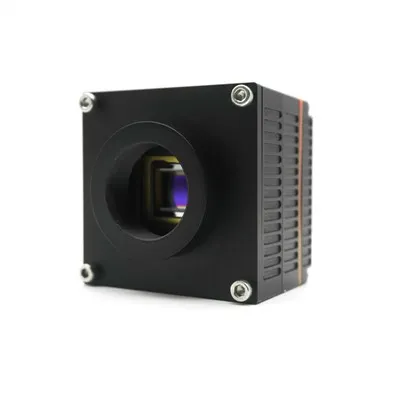
Hey there, folks! As a supplier of MWIR (Mid-Wave Infrared) camera lenses, I’m super stoked to dive into a cool topic today: How does the MWIR camera lens stack up against SWIR (Short-Wave Infrared) camera lenses? MWIR Camera Lens
Understanding the Basics
First off, let’s get a bit of background. In the world of infrared imaging, the electromagnetic spectrum is our playground. Infrared light is divided into different bands, and the two we’re talking about – MWIR and SWIR – have their own unique characteristics.
MWIR covers the wavelength range of about 3 to 5 micrometers. It’s great for detecting things that emit heat, like engines, buildings losing heat, or even living organisms. That’s because most objects at normal temperatures radiate in this wavelength range.
On the other hand, SWIR operates in the 1 to 3 micrometer range. SWIR is less about heat and more about reflected light. It’s really useful for applications where you want to see through certain materials, such as detecting defects in semiconductors or monitoring crop health by looking at the reflection of sunlight from plants.
Performance in Different Environments
Let’s talk about how these two types of lenses perform in the real world.
When it comes to low – light conditions, MWIR camera lenses are pretty awesome. Since they rely on the heat emitted by objects, they can work well at night or in areas with very little visible light. For example, in a security surveillance application, an MWIR camera can easily spot a human intruder in a dark parking lot just by the heat signature. It doesn’t need any external light source to function effectively.
SWIR, however, needs some ambient light to operate. It depends on the reflection of light in the short – wave infrared range. So, in complete darkness, it might not be as useful as MWIR. But in daytime or in an environment with artificial light sources, SWIR can provide high – resolution images. Take, for instance, aerial mapping. During the day, a SWIR camera can capture detailed images of the land, highlighting different types of vegetation and geological features based on the reflection of sunlight.
In terms of atmospheric conditions, MWIR has its pros and cons. Water vapor in the atmosphere can absorb some of the MWIR wavelengths, which might reduce the image quality over long distances. But it’s still better than visible light in foggy or hazy conditions. SWIR, on the other hand, has better transmission through the atmosphere, especially in dry conditions. It can penetrate some types of dust and haze more effectively, making it a great choice for long – range monitoring in desert regions.
Resolution and Sensitivity
Resolution is a big deal when it comes to camera lenses. MWIR camera lenses are generally capable of providing good resolution, but it can be limited by the detector technology. Thermal detectors in MWIR cameras have a certain level of pixel density, which determines how sharp the image can be. However, with advancements in technology, the resolution of MWIR cameras is getting better all the time.
SWIR cameras often have higher resolution potential. The detectors used in SWIR cameras can be made with smaller pixel sizes, resulting in more detailed images. This is crucial in applications like machine vision, where you need to detect very small defects or features on a product.
Sensitivity is another important factor. MWIR camera lenses are extremely sensitive to heat differences. They can detect even the slightest temperature variations in an object, which is why they’re so good for things like detecting electrical faults in power lines. A small increase in temperature due to a bad connection can be easily spotted by an MWIR camera.
SWIR lenses are sensitive to the intensity of reflected light in the short – wave infrared range. They can differentiate between different materials based on how they reflect light. For example, in food inspection, a SWIR camera can detect the ripeness of fruits by analyzing the reflection of SWIR light from the fruit’s surface.
Cost Considerations
Let’s be real – cost matters. When it comes to MWIR camera lenses, they can be a bit more expensive upfront. The materials used in MWIR lenses, such as germanium, are costly. Germanium is a great material for MWIR because it has good transmission properties in the 3 – 5 micrometer range, but it’s not cheap. Additionally, the production process for MWIR lenses is more complex, which adds to the cost.
SWIR camera lenses are generally more affordable. The materials used, like silicon, are more readily available and less expensive. The manufacturing processes for SWIR lenses are also less intricate, resulting in a lower overall cost. If you’re on a tight budget, SWIR might be the way to go. But if you need the unique capabilities of MWIR, like heat detection, it might be worth the investment.
Applications
The choice between MWIR and SWIR camera lenses also depends on the specific application.
MWIR is a rockstar in the military and defense sector. Night vision goggles, target acquisition systems, and missile guidance all rely on MWIR technology. It can detect enemy vehicles and personnel in the dark, giving the military a significant advantage. In the industrial field, MWIR cameras are used for thermal imaging in manufacturing processes. They can monitor the temperature of machinery and identify potential problems before they cause a breakdown.
SWIR is widely used in the agriculture industry. It can help farmers monitor the health of their crops by detecting water stress, nutrient deficiencies, and pest infestations. In the medical field, SWIR is used for non – invasive imaging, such as looking at blood flow under the skin. It’s also used in astronomy to observe celestial objects that emit or reflect SWIR light.
Conclusion
So, to sum it up, both MWIR and SWIR camera lenses have their own strengths and weaknesses. MWIR is great for heat detection, works well in low – light conditions, but can be more expensive. SWIR offers high – resolution images, better atmospheric transmission in some cases, and is more budget – friendly.
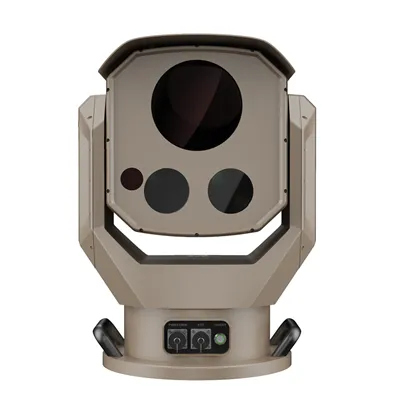
MWIR Thermal Imager 1280 If you’re in the market for a camera lens and are trying to decide between MWIR and SWIR, I’d love to have a chat with you. We can go over your specific needs, budget, and application requirements. Whether you end up choosing an MWIR camera lens or think SWIR is a better fit, my team and I are here to help you make the right decision. So, don’t hesitate to reach out for a friendly chat and let’s start discussing your next camera lens purchase!
References
- Caffrey, M. P. (2017). Infrared Detectors and Emitters: Materials, Devices, and Applications. John Wiley & Sons.
- Rogalski, A. (2011). Infrared Detectors: Fundamentals and Applications. John Wiley & Sons.
Xi’an Zhongke Lead Ir-Tech Co., Ltd.
We are one of the most experienced mwir camera lens manufacturers in China, specialized in providing high quality OEM products with the industrial grade. We warmly welcome you to wholesale high performance mwir camera lens at an affordable price from our factory.
Address: Building 8,Hard Technology Enterprise Community No.3000,Biyuan 2nd Rd,High-Tech Zone Xi’an,Shaanxi,China
E-mail: sales@lead-ir.com
WebSite: https://www.leadinfrared.com/
