Hey folks, let’s cut to the chase: if you’re in the infrastructure game—whether you’re a contractor managing road projects, a fabricator supplying guardrails, or a small shop looking to scale your line—you’ve probably wondered: Is a guardrail roll forming machine actually worth the dough? As someone who’s sold and serviced these bad boys for over a decade, I get it. No one wants to drop $50k+ on a machine without knowing if it’ll pay for itself fast, or if it’s just a fancy paperweight collecting dust in a corner. Let’s break this down like we’re chatting over a coffee, no stuffy jargon, just real numbers and real-world stuff I see every week. Guardrail Roll Forming Machine
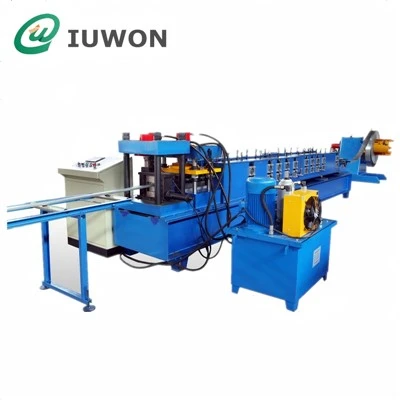
First, let’s skip the basics. What does a guardrail roll forming machine even do? It takes flat steel coils (the raw stuff, not pre-cut rails) and runs it through a series of rollers to shape it into that standard W-beam or Thrie-beam guardrail you see along highways. Old days, you’d buy pre-formed rails from a supplier—each ton of that shaped rail would run you, let’s say, $1,200 to $1,500. But if you own the machine, you’re only paying for the raw steel, plus a tiny bit for electricity and upkeep. That’s where the cost savings kick in, but let’s not get ahead of ourselves. We’ve gotta add up the whole cost, not just the price tag of the machine, to get a true cost-effectiveness number.
Let’s start with the upfront cost. A mid-tier guardrail roll forming machine (the one most small to mid-sized shops or contractors use, not the $100k industrial behemoths) runs between $45k and $75k. Now, compare that to what you’d spend on pre-formed rails for a single 2-mile highway project. Let’s crunch that: a standard W-beam guardrail is about 12 feet long, weighs ~12 lbs per foot, so ~144 lbs per beam, ~6.9 beams per ton. For a 2-mile road (10,560 feet), that’s 880 beams, ~61.1 tons. Pre-formed, that’s $73k to $91k just for that project. If you buy the machine, you’d spend ~$50k, and that’s the base for every future project after. Wait, that’s a win already, but let’s factor in the hidden costs everyone forgets.
First, waste. When you buy pre-formed rails, you’re dealing with a supplier’s markup and their material waste. A good roll forming machine cuts your material waste to like 2% max. Why? Because you’re running exactly the length you need, no cutting extra or dealing with supplier defects they pass off. Pre-formed rails? Most fabricators have a 5-8% waste rate for handling, shipping, and misalignments. For that same 2-mile project, that’s ~3 tons of wasted steel. At $1,300/ton, that’s $3,900 to $10,400 down the drain. Add that to the pre-formed cost, and that 2-mile project’s total material spend jumps to $76.9k to $101.4k. With your machine, you skip that waste entirely—no extra steel, no throwing away mis-shaped parts because you’re forming them on demand.
Next, labor. Let’s be real: if you’re buying pre-formed, you’re paying someone else to load, unload, inspect, and deliver those rails. With your own machine, you might need one part-time operator, not a full team. Wait, let’s do real numbers. A part-time operator for roll forming makes ~$18-$22 an hour. A full-time logistics team to handle pre-formed rails? That’s two to three people on salary, plus overtime, plus delivery costs. For a shop doing 4 projects a year, that’s $80k-$120k a year in logistics and labor for pre-formed rails. With your machine? That operator’s job is 10-15 hours a week, max—maybe $15k a year total, and you’re not paying for trucking (which is another $1,000-$3,000 per project, btw). That’s a massive save.
But let’s not pretend there’s no upfront grind. Maintenance, for example. A good guardrail roll forming machine needs routine checks: lubricating rollers, tightening frames, replacing worn blades. That’s ~$1,500-$3,000 a year in parts, plus maybe 5-10 hours of your time. Compare that to… wait, what else are you already spending on guardrails? Let’s talk about demand too. If you’re in a rural area where infrastructure projects pop up every 6 months, that’s easy to pay off. But even in urban areas with tight project deadlines, being able to form rails on demand means you don’t have to wait 2-3 weeks for a supplier to deliver. That’s a game-changer for avoiding project delays and potential penalty fees (which can be $5k a day, no cap).
Wait, let’s do a payback period for a real example. Let’s say you buy a $55k mid-tier machine, work 3 projects a year, each saving $20k on pre-formed rails, plus $5k in labor and waste savings per project. That’s $25k a year in net savings. So payback period is ~2.2 years. That’s insane! Most industrial equipment takes 5+ years to pay off, right? But let’s be honest— that’s if you’re using the machine consistently. If you only use it once a year, yeah, it’d take 10 years. But who’s buying a guardrail roll forming machine and only using it once? That’s like buying a truck to move one couch.
Now, let’s talk about the not-so-obvious perks that tie into cost-effectiveness. Scaling. If you’re a small shop that lands a big project, you can ramp up your output instead of begging suppliers to prioritize your order. No more “sorry, we’re backordered 4 weeks” texts. Also, selling excess rails—if you form more than you need for a project, you can flip them to local contractors or small shops. That’s extra cash you wouldn’t get with pre-formed purchases. I’ve had a customer in Ohio buy a machine for his own projects, then sell 10 tons of W-beams to a nearby county road department last year for $14k. That’s pure profit, no extra work.
But wait, let’s call out the downsides to be transparent. If you’re a one-man show with only 1 small project a year, this machine might not make sense. Also, you need space—these things are 20-30 feet long, so you can’t stick it in a tiny garage. And yes, even good machines break sometimes. But here’s the thing: a lot of newer machines (the ones we sell) come with remote diagnostic support, so if a roller jams, we can walk you through fixing it in 10 minutes, no service call fee. Compare that to a service call for a pre-formed fabricator—they’ll charge you $200 just to show up, plus parts.
Another hidden cost no one talks about: inventory. Pre-formed rails take up warehouse space. For a 2-mile project, that’s 61 tons of steel—you’re renting that warehouse space, which is like $100-$200 a ton a year. With a roll forming machine, you only buy steel right before you use it. No storing 60 tons of raw steel in a warehouse, no paying rent on that space. That’s another $6k-$12k a year in savings for that same project load.
Let me wrap this up with a quick breakdown of who this is for and who it’s not. It’s a solid investment if: you manage 2+ infrastructure projects a year, have space for a 25-foot machine, can spare 10 hours a week for an operator, and want to cut costs, avoid delays, and keep more profit on your bottom line. It’s not worth it if you only do 1 small project every 2 years, or have nowhere to put the machine.

At the end of the day, I see customers come to me asking if these machines are a scam or a win, and 9 out of 10 who use them consistently say they’d never go back to buying pre-formed. The numbers don’t lie: payback periods of 2-3 years, consistent savings on materials, labor, and delivery, plus the flexibility to take on more jobs and avoid backorder headaches.
Gutter Roll Forming Machine If you’re weighing this, I get it—no one wants to waste money on equipment that doesn’t pull its weight. If you wanna chat through your specific projects, your current costs, and what machine would fit your space and budget, hit me up. I don’t do pushy sales pitches, just straight talk about what works for guys in the trenches like us.
References
- American Road & Transportation Builders Association. (2022). Guardrail Material Cost Trends and Waste Analysis for Road Infrastructure Projects.
- National Steel Construction Association. (2023). Cost-Effectiveness of Roll-Formed Steel Components for Highway Safety Barriers.
- U.S. Small Business Administration. (2021). Payback Period Calculations for Manufacturing Equipment in the Construction Industry.
- Federal Highway Administration. (2022). Highway Safety Barrier Installation Labor and Logistics Cost Benchmarks.
Hanghzou IUWON Technology Co., Ltd.
Hanghzou IUWON Technology Co., Ltd. is one of the most professional guardrail roll forming machine manufacturers and suppliers in China. Please feel free to buy high quality guardrail roll forming machine made in China here from our factory. For price consultation, contact us.
Address: No.755, Xintangtou Village, Xinjie Street, Xiaoshan District, Hangzhou, Zhejiang
E-mail: sales@iuwon.com
WebSite: https://www.iuwonforming.com/
